
📌 Overview
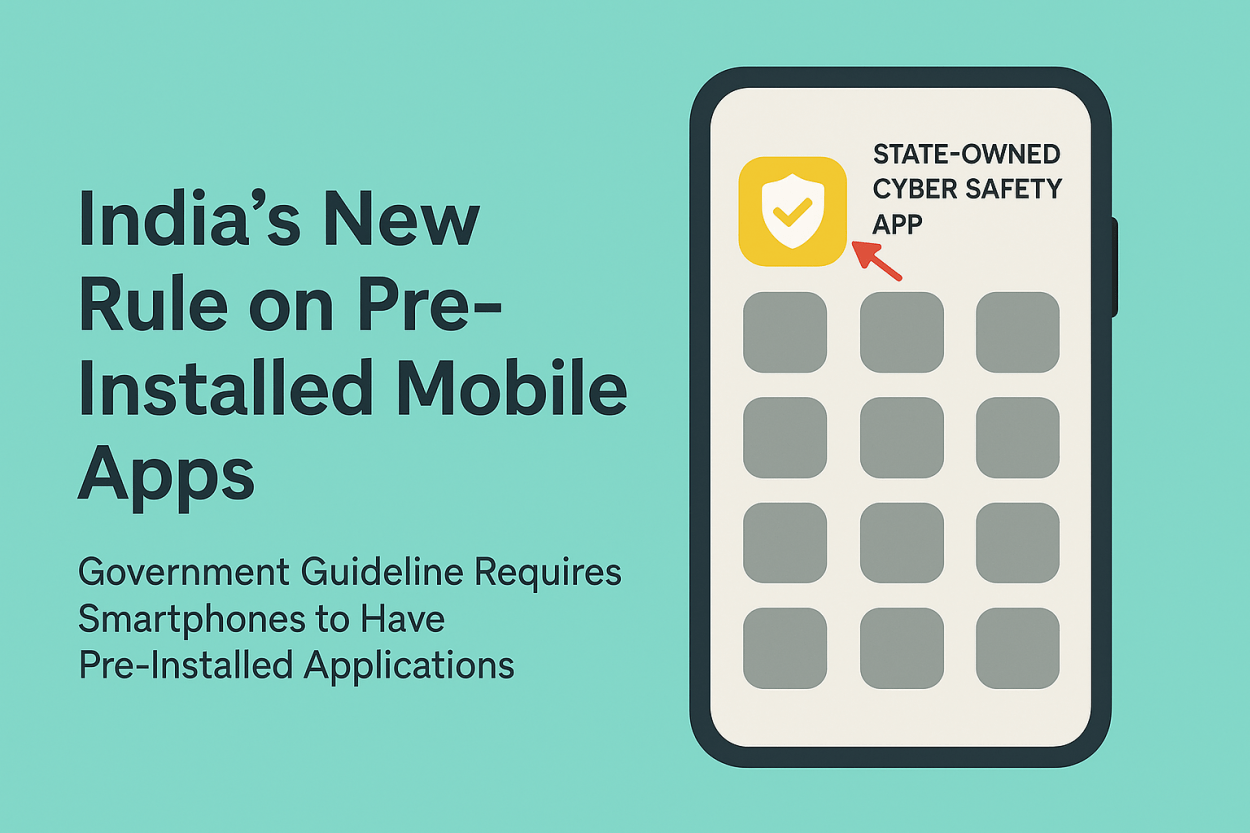
The Indian government has issued a new directive. This requires smartphone manufacturers to pre-install the government’s cyber-safety application, Sanchar Saathi. The application must be on all new smartphones sold in the country.
This move is aimed at strengthening device security, reducing mobile theft/fraud, and providing users with real-time protection tools.
Yet, the decision has also triggered debates around privacy, data control, and the concept of “bloatware” on new smartphones.
This blog breaks down the guideline in simple terms. It explains what it means for you and why it was introduced. It also covers how the industry is responding and whether you should worry.
📢 What Exactly Has the Government Mandated?
According to reports by Reuters, The Verge, Financial Express, and others, the Government of India has instructed smartphone makers — including Apple, Samsung, Xiaomi, Vivo, Oppo, and others — to:
1️⃣ Pre-install the Sanchar Saathi app on all new mobile phones
This app is developed by the Department of Telecommunications (DoT).
2️⃣ Ensure users cannot skip the installation during device setup
The app will be present out-of-the-box.
3️⃣ Comply with a uniform security standard for devices
Manufacturers must ensure the app is functional and accessible.
4️⃣ Rollout effective from upcoming device shipments
This is not retroactive — existing phones will not receive a forced installation.
📱 What is the Sanchar Saathi App?
Sanchar Saathi is a government app launched earlier to help users:
- Check mobile connection ownership under their name
- Report lost or stolen phones
- Block IMEI of stolen devices
- Detect fraudulent SIMs issued using your identity
- Request reactivation of recovered phones
- Prevent mobile identity misuse
The DoT claims the app has helped block thousands of fake SIM cards and track phone fraud nationwide
🤔 Why Did the Government Introduce This Mandate?
As per official statements and media reports, the intent is to:
✔ Reduce cyber fraud
India has seen a sharp rise in SIM-based scams.
✔ Protect citizens from identity misuse
Sanchar Saathi helps detect unauthorized SIMs registered using your Aadhaar.
✔ Speed up stolen phone recovery and IMEI blocking
✔ Create a unified nationwide security framework for mobile devices
The government argues that cybersecurity must start at the device level.
⚠️ Why Is This Guideline Controversial?
Privacy advocates and tech experts have raised concerns:
1. Forced installation = Bloatware?
Critics argue that pre-installed apps reduce user freedom.
2. Questions on data collection
Although the government says the app is privacy-safe, users worry about:
- Access to personally identifiable information
- Centralized tracking risk
3. Impact on Apple & Android OEMs
Apple doesn’t usually allow government apps to be forced on devices.
This rule could create friction in compliance and software control.
4. Lack of user choice
Forcing installation, rather than optional installation, is the primary issue.
📊 Industry Reaction So Far
Early responses from industry sources (as reported):
- Apple is reviewing implications and may seek exceptions.
- Android OEMs are more flexible but have expressed concerns about user experience.
- Privacy groups demand clear data-usage disclosures.
- Some cybersecurity experts say the app could indeed reduce fraud if implemented responsibly.
🧭 Should You Be Concerned as a User?
Here’s the simple breakdown:
✔ Good for you if:
- You want a tool to check if someone took a SIM using your ID
- You frequently misplace phones
- You worry about phone theft
- You want better nationwide cyber protections
❌ Potentially concerning if:
- You don’t like mandatory government apps
- You are sensitive about data collection
- You prefer minimalistic phones without extra apps
📌 Author’s Note
This article is based on publicly available information, verified news reports, and multiple reputable sources. It is intended solely for informational and research purposes. The author does not claim responsibility for policy decisions, regulatory interpretations, or future changes in government guidelines. Readers are encouraged to review official notifications for the most accurate and updated details.
 Tech Mayank