
Just as Microsoft built Typescript to update JavaScript, and Kotlin was created to shore up weaknesses in Java, Carbon could serve as a successor language to C++. So Hi There, This is Mayank and I am going to talk about The brand new programming Language “Carbon” which is recently launched by google and hosted on Github(“github.com/carbon-language/carbon-lang”).
Let’s Begin..
Over the years, Google has created a few programming languages, some of which have become more popular and prominent than others. For example, Golang (or simply Go) was created for the purpose of improving the development of servers and distributed systems and has since been adopted by the public. Meanwhile, the Dart programming language, originally intended as something of an alternative to JavaScript, didn’t reach mainstream popularity until the release of Flutter.
What about Carbon?
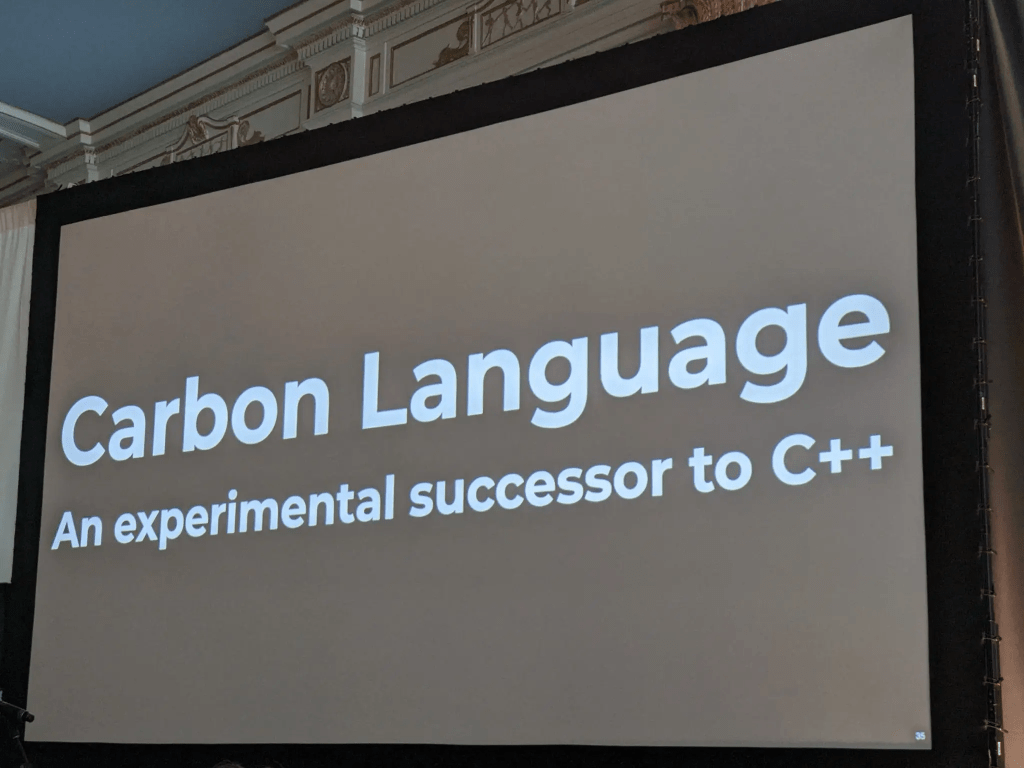
The design wants to release a core working version (“0.1”) by the end of the year. Carbon will be built on a foundation of modern programming principles, including a generics system, that would remove the need to check and recheck the code for each instantiation.
Another much-needed feature lacking in C++ is memory safety. Memory access bugs are one of the largest culprits of security exploits. Carbon designers will look for ways to better track uninitialized states, design APIs and idioms that support dynamic bounds checks, and build a comprehensive default debug build mode. Over time, the designers plan to build a safe Carbon subset.
According to the documentation, the language will support:
- Performance-critical software
- Software and language evolution
- Code that is easy to read, understand, and write
- Practical safety and testing mechanisms
- Fast and scalable development
- Modern OS platforms, hardware architectures, and environments
- Interoperability with and migration from existing C++ code.
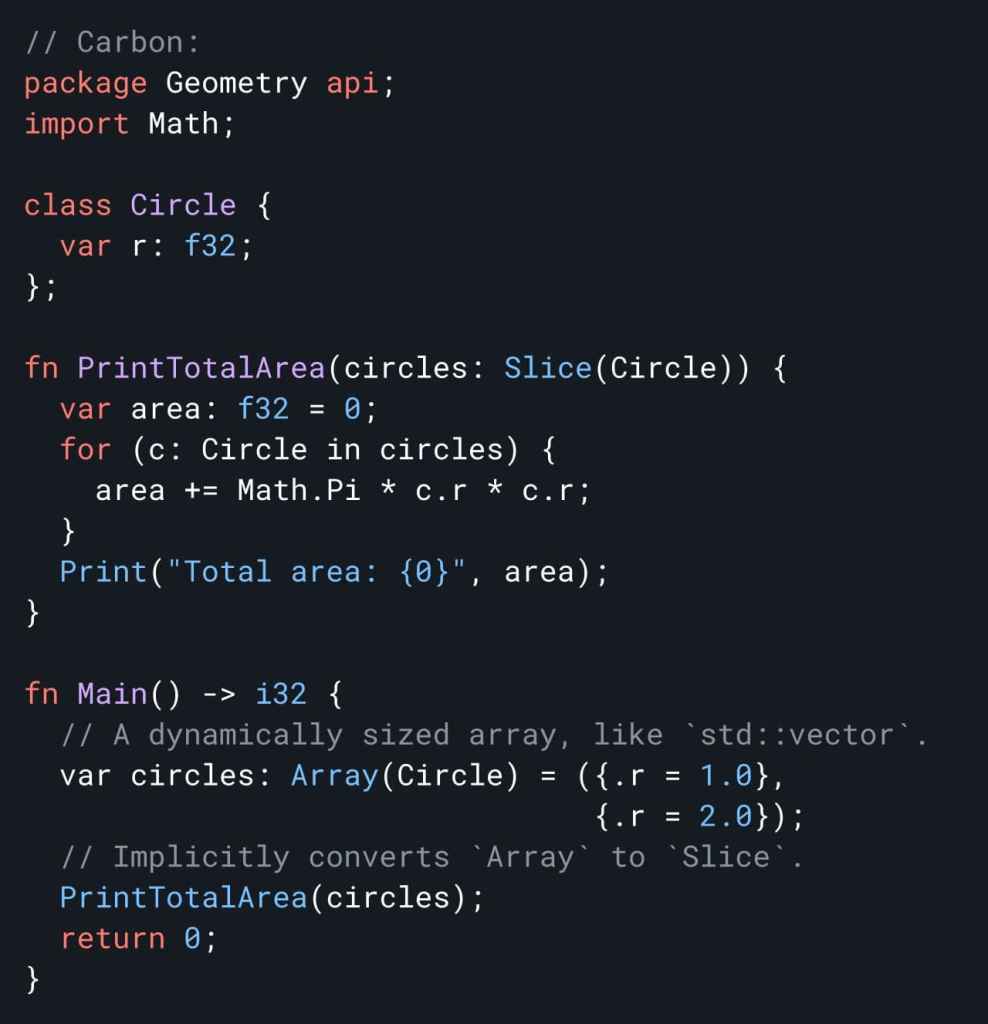
Beyond the features of the language itself, the Carbon team drew attention to the development process that will shape Carbon’s future. The project’s code is hosted publicly on GitHub and is open for pull requests, while Carbon’s culture is outlined to be accessible and inclusive for employees of companies and private individuals, alike.
That said, one aspect of the Carbon programming language that’s not particularly well outlined is Google’s involvement. While today’s presentation was shared by a Googler, and the current project leads for Carbon consist primarily — but not entirely — of Googlers, there’s otherwise no mention of Carbon being a Google project.
This is actually intentional, as while Carbon got its start within Google, the team understands and has shared online that for it to have any future success, Carbon needs to be “an independent and community driven project,” not solely driven by Google’s own uses. In the same comment, Carruth further emphasizes that Carbon is currently just an experiment, albeit one that some companies have already shown early interest in.
Thank You for Reading till here. Have a good time. Signing Off.
More Blogs:
 Tech Mayank